
DanT
Homage to the Danish poet Dan Turèll
DanT - Cabinet
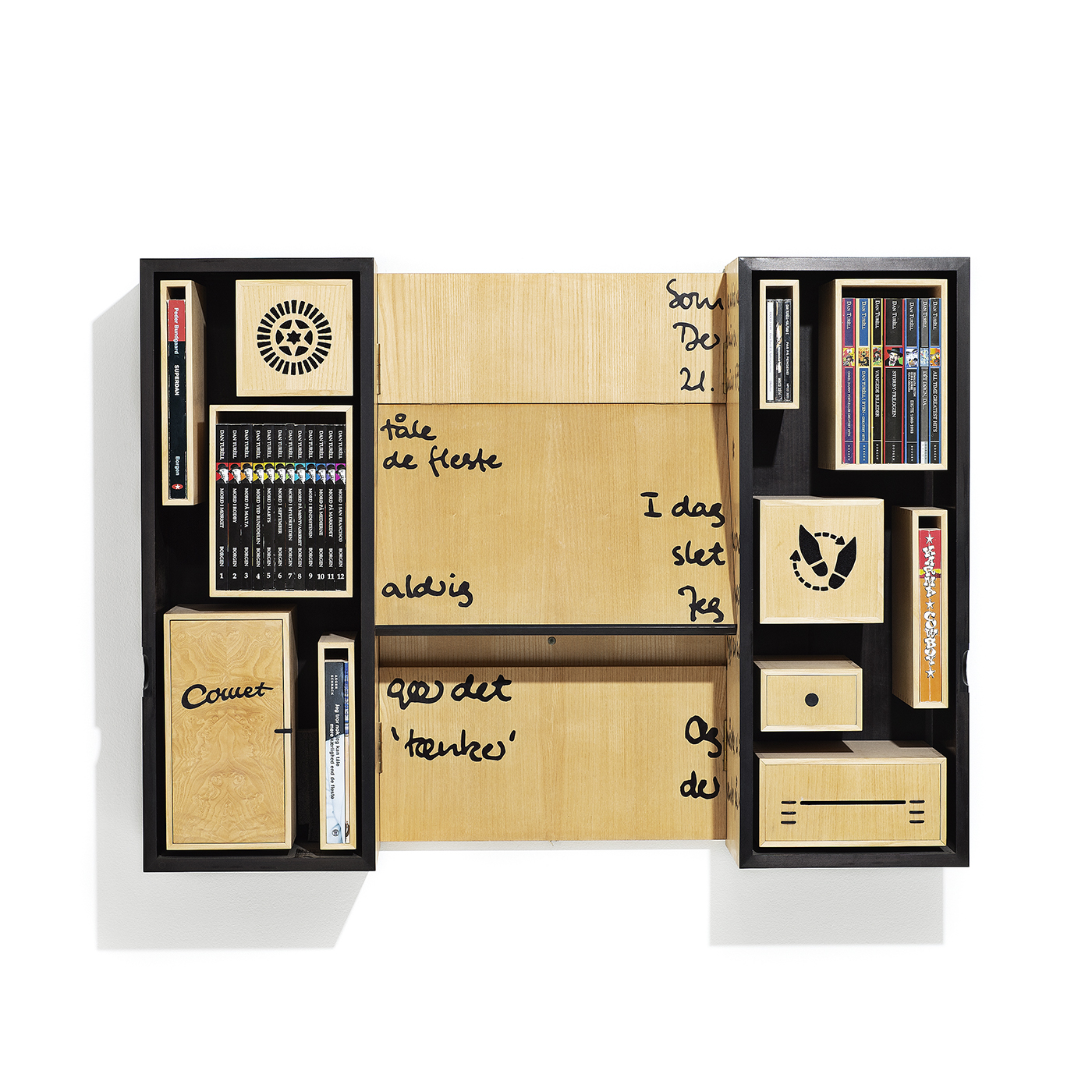
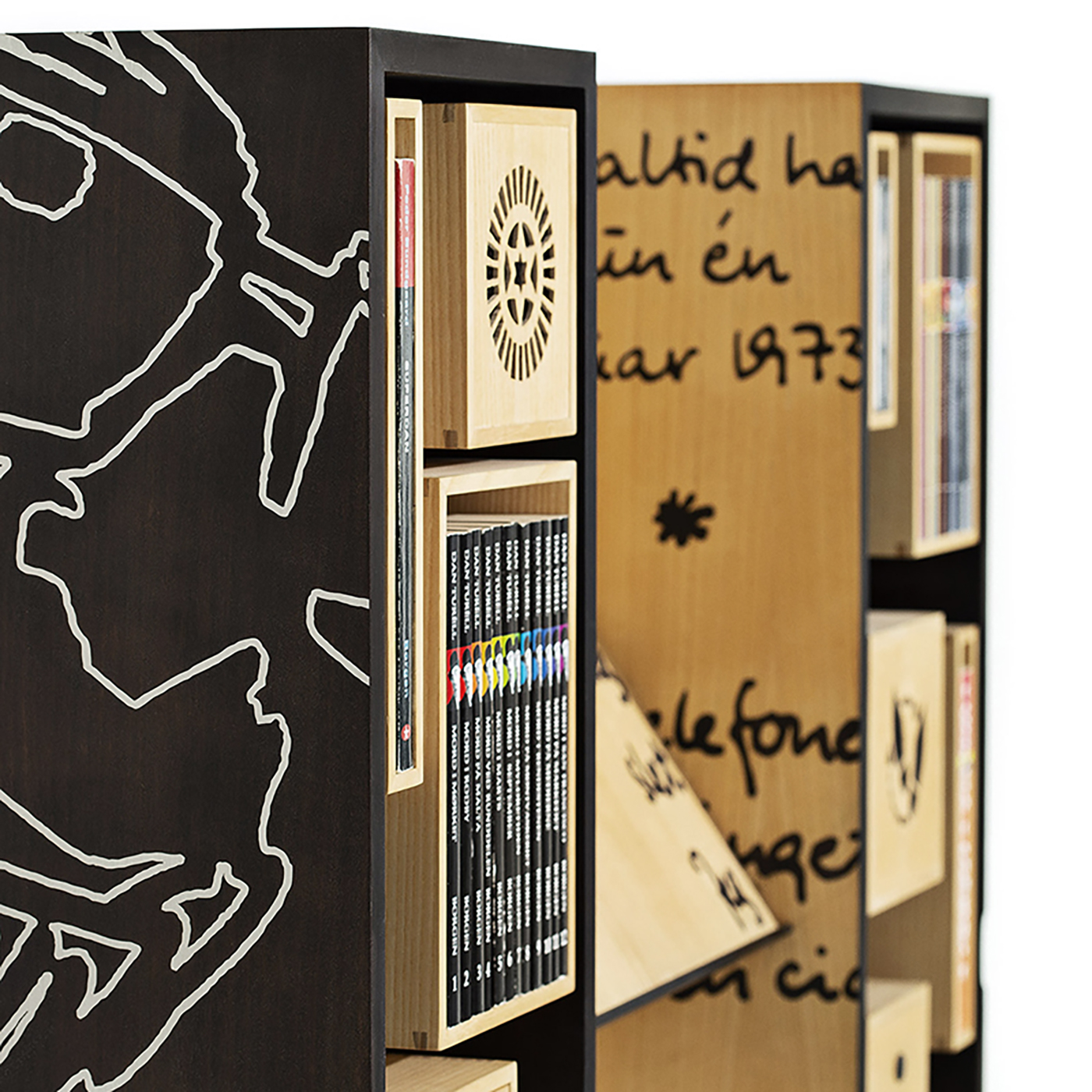
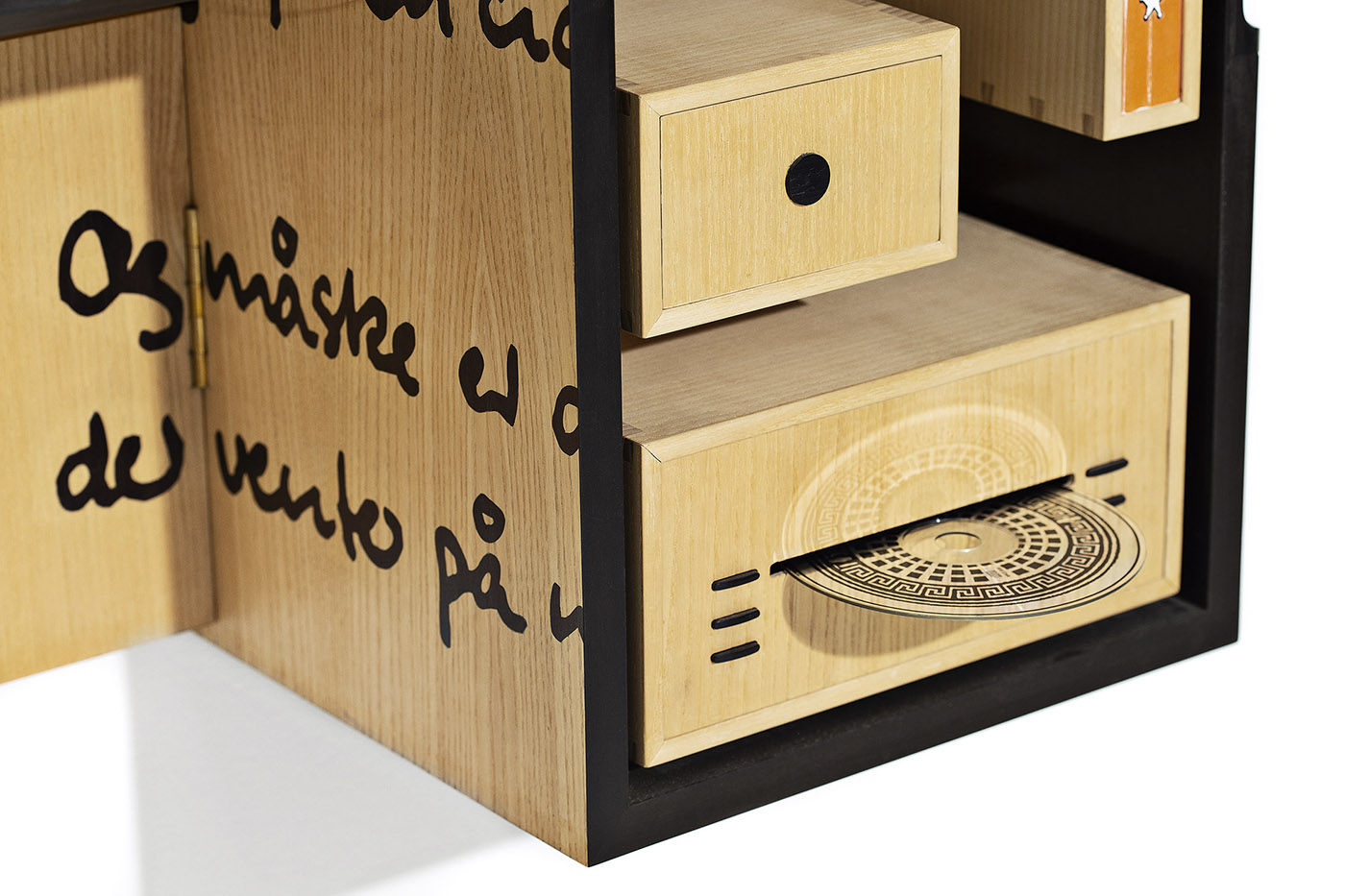
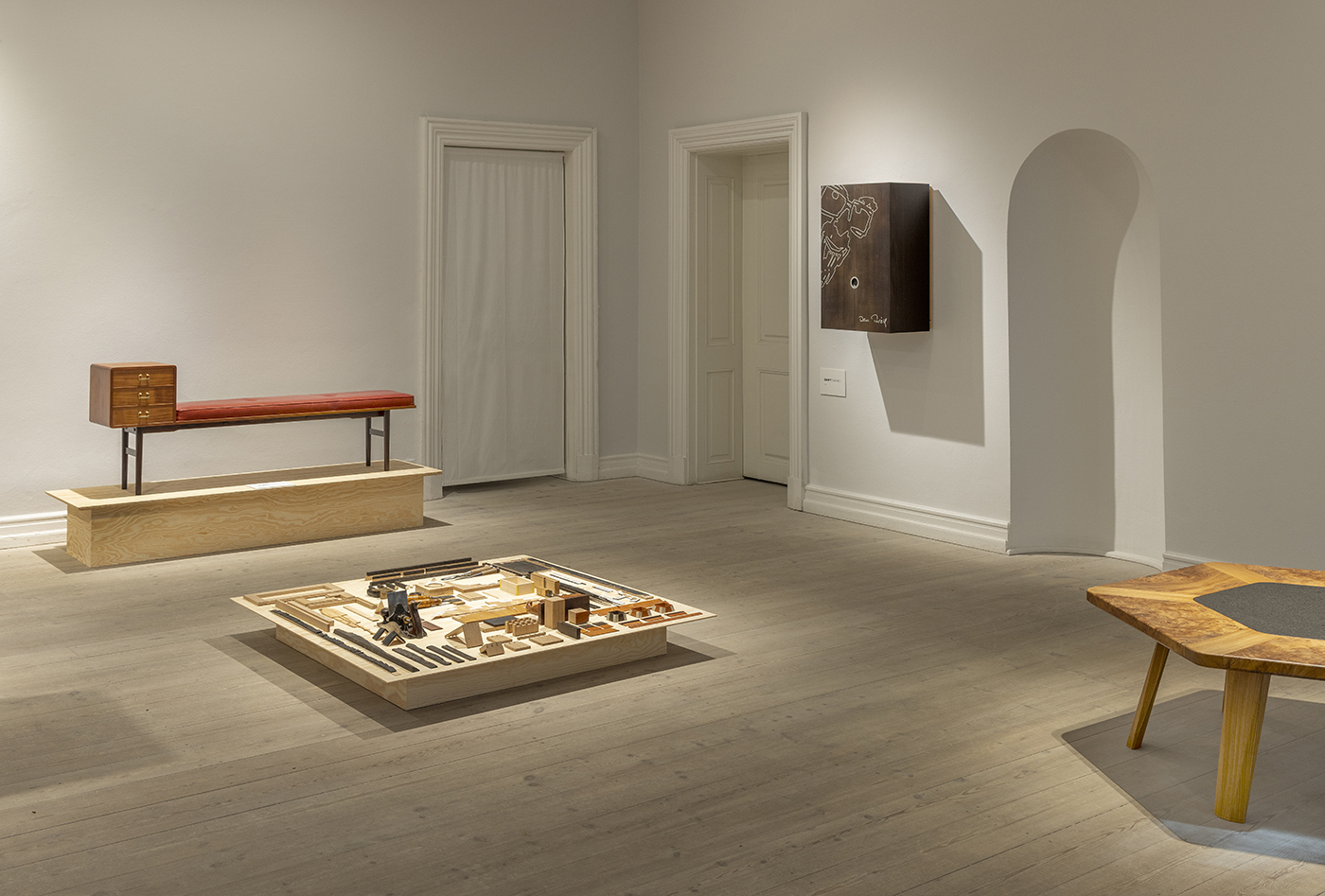
The cabinet was completed on the 10th anniversary of the poet Dan Turèll’s death. It was made for an exhibition of 11 cabinets made by members of the Danish Cabinetmakers Association. The brief for the design was to base the pieces on associations with a word ending in -skab in Danish (meaning ‘cabinet’, linguistically corresponding to -ship in English). All the cabinets had to have the same external dimensions. I dealt with the latter restriction by making a cabinet that unfolded to double width when it is opened.
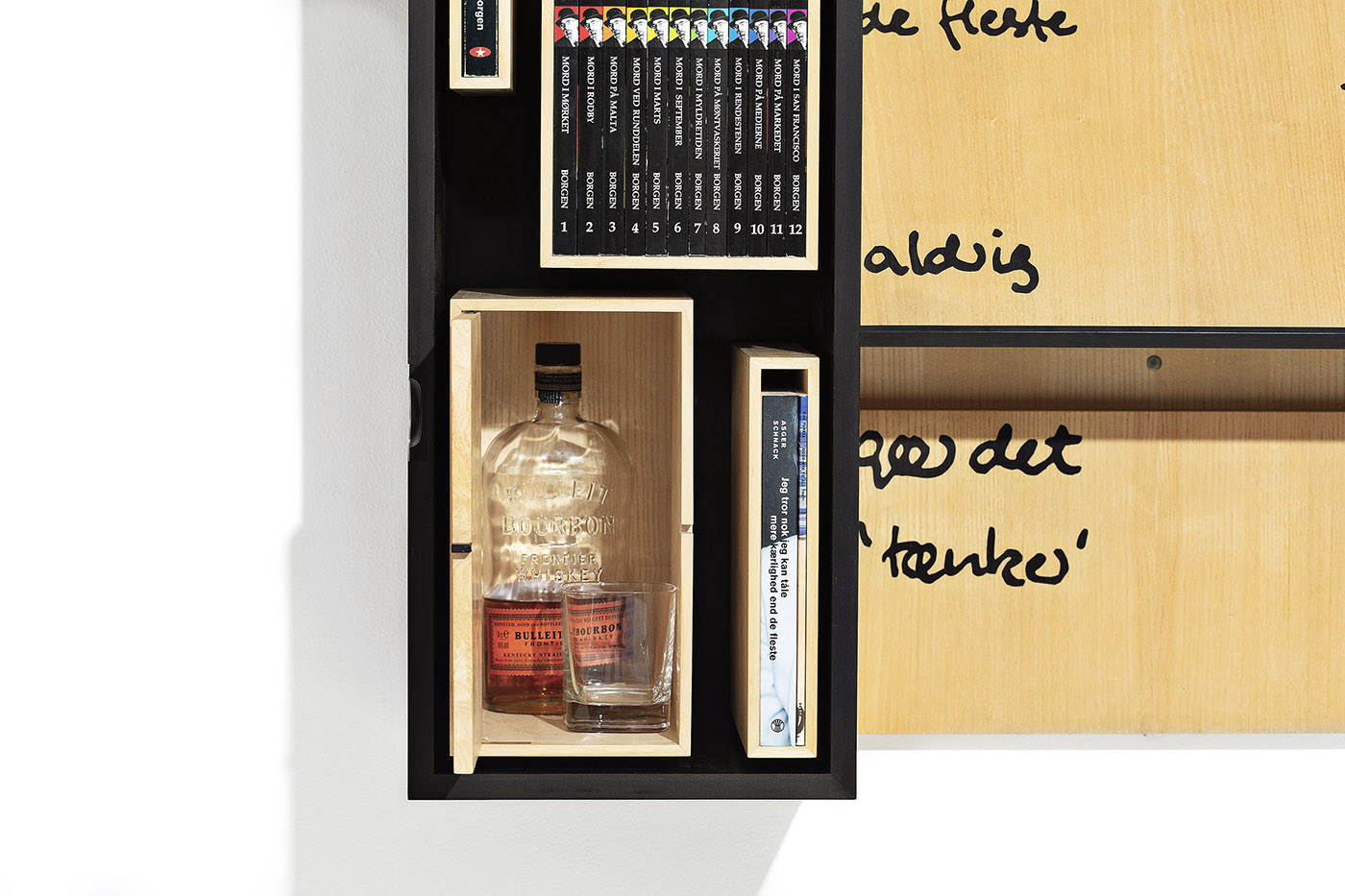
The Dan T cabinet has an association to the word authorship and contains many different compartments for Dan’s novels and collections of poems, a minibar, a drawer for the author’s signature black nail polish, his hash pipe and a CD-player with loudspeakers. All the compartments in the cabinet are made of solid ash assembled hand-carved dovetail joints.
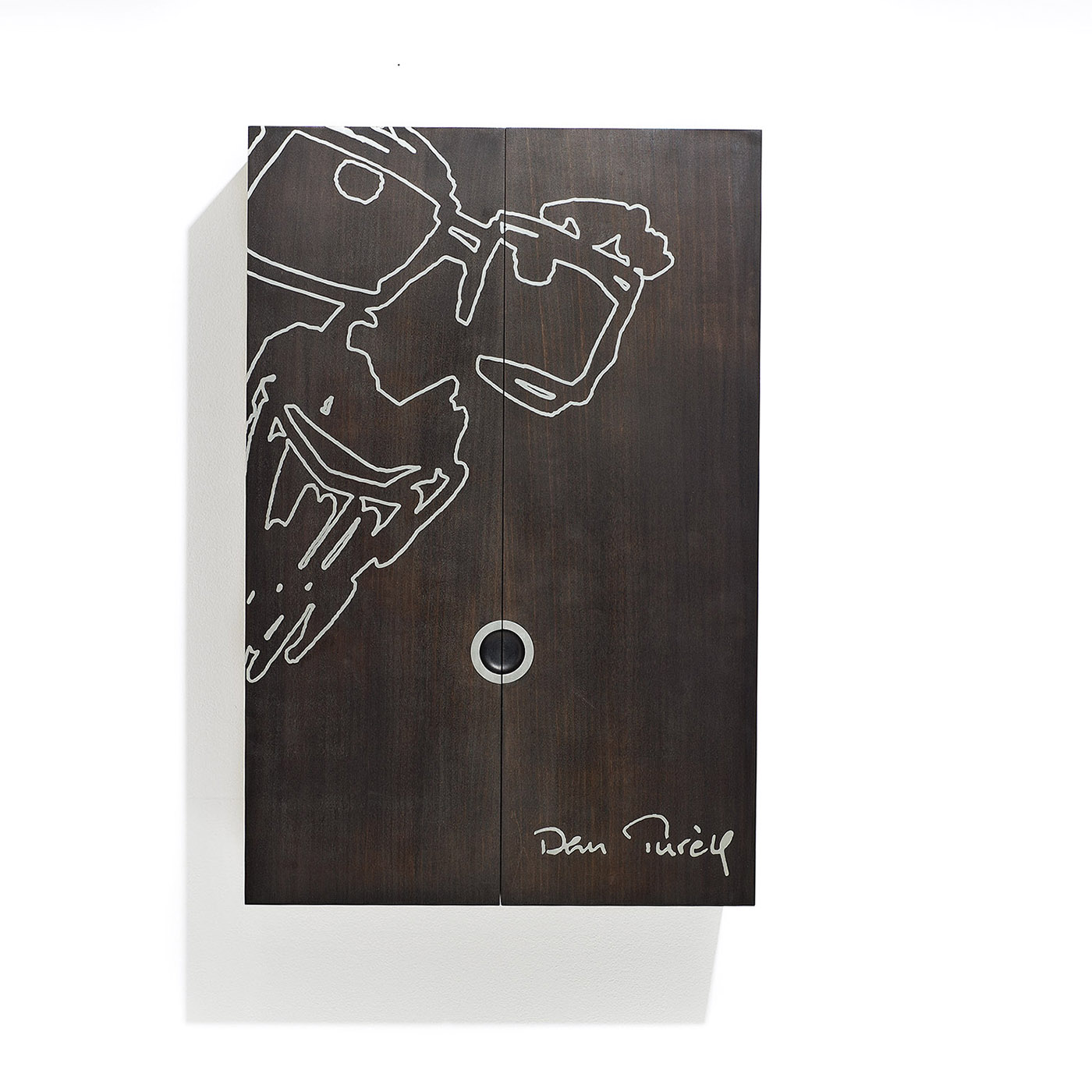
The intarsia on the exterior of the cabinet reflects the author’s sharp black look through the precise contour lines in pewter inlaid in black wood, while the light-coloured interior was inspired by the pages of a book, including Dan’s characteristic signature blown up and inlaid. I had the intarsia wrap around the corners for a more three-dimensional effect. This was inspired by Japanese lacquerware boxes, which often use this feature.
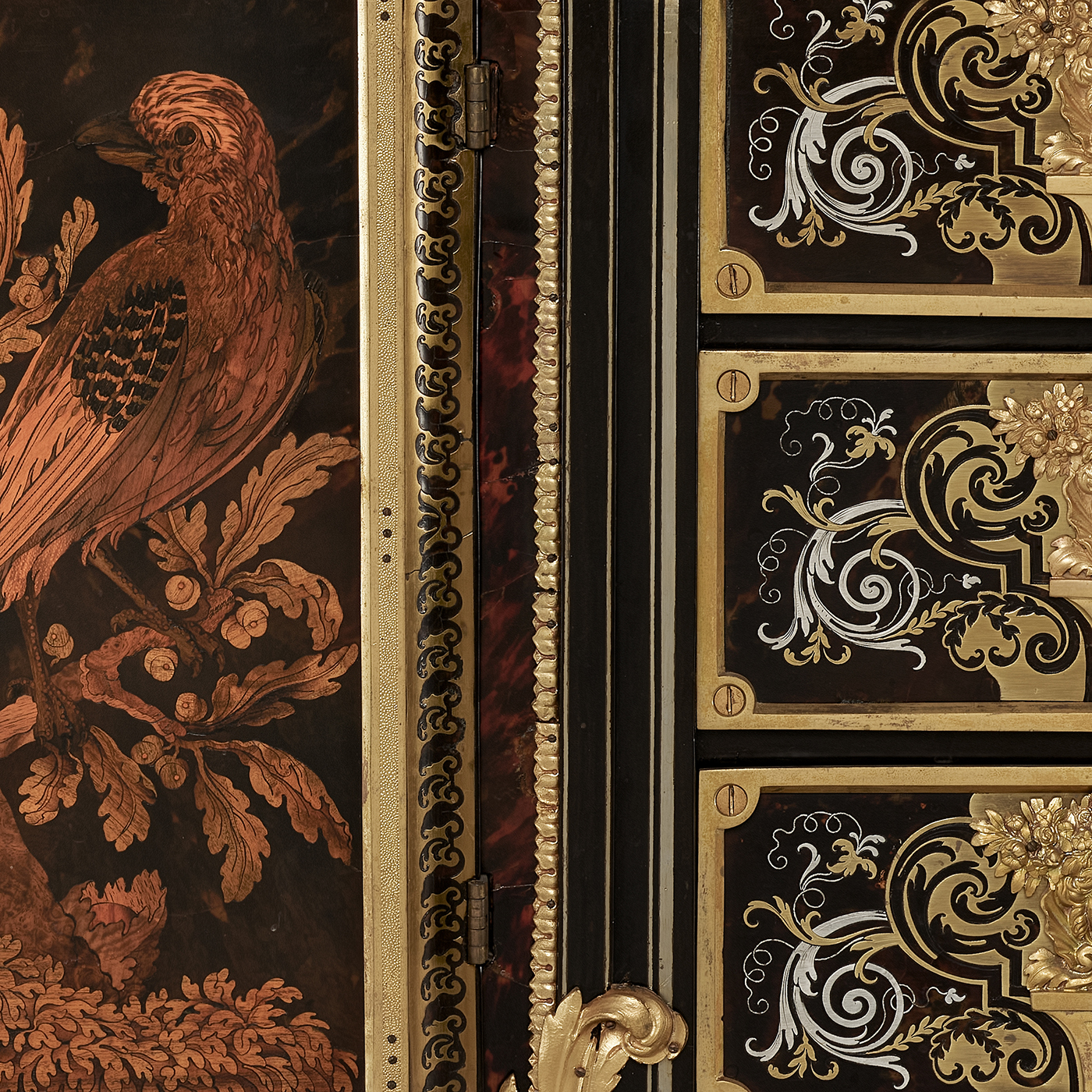
INSPIRATION: ANDRÉ-CHARLES BOULLE PARIS · FRANCE
The intarsia technique used on the front of the cabinet was inspired by a traditional method called boulle intarsia. The style, which is found in furniture and clocks from the French baroque era, is known for its lavish expression with detailed arabesques. It uses tortoiseshell, brass or pewter in high-contrast intarsia decorations. The method was perfected by the French ébéniste André-Charles Boulle (1642–1732). Boulle developed the exquisite première partie (brass on tortoiseshell) and contre-partie (tortoiseshell on brass) styles, which created two identical but contrasting images using the same materials.
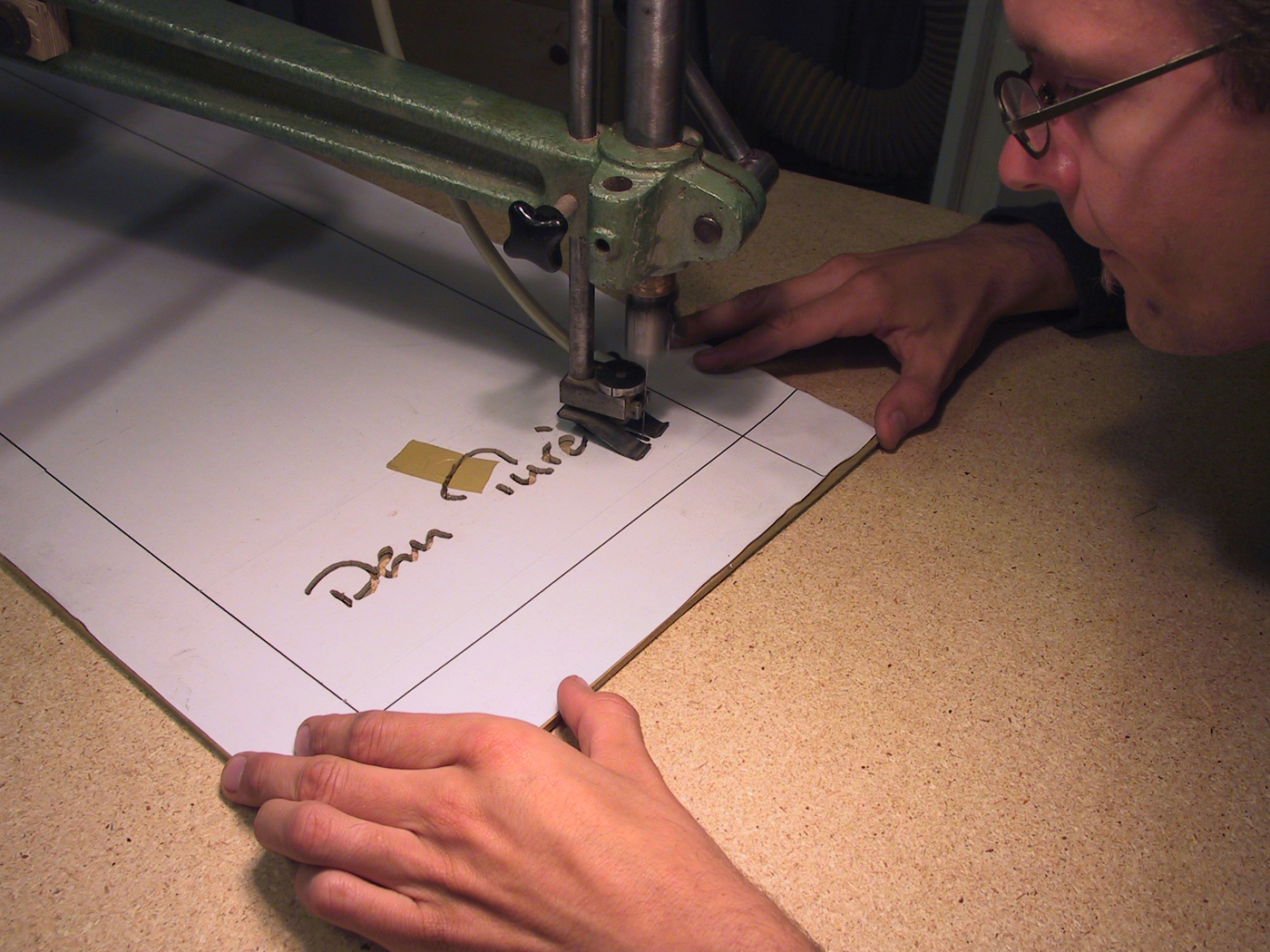
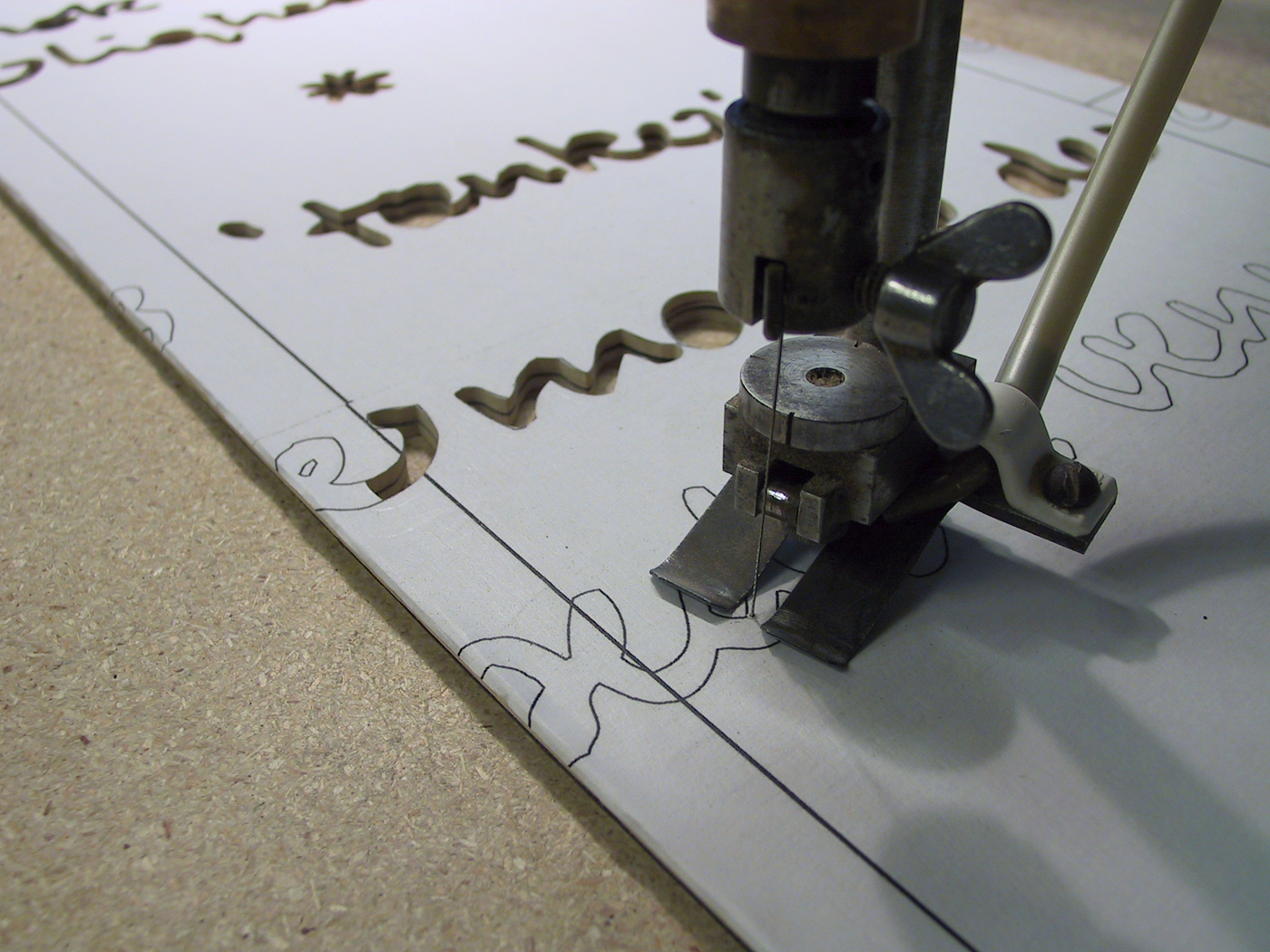
A pewter sheet and a piece of black veneer are combined into a package with thick abachi veneer on both sides and the image glued on top. Next, the image is cut out following the outline directly, unlike traditional intarsia, in which the image is cut out as a background with the various elements cut individually on opposite sides of the outline. The Boulle approach allows for freer cutting that followed the outline of the handwriting. I borrowed a fretsaw at the Amalienborg joinery workshop to cut the image; I had to add an extension to the frame of the saw to be able to cut the large pieces.
Exhibitied:
The Danish Cabinetmakers Association’s ‘10-Year Anniversary Exhibition’ at Designmuseum Danmark, Copenhagen, 2002
Trapholt Art Museum, Kolding, 2003
Form/Design Center, Malmö, 2003
Den Norske Husfliden, Oslo, 2005
Tasmanian Crafts Fair, Deloraine, 2006
OFFCUT/RECUT, Copenhagen 2026


Measurements
Width:
Height:
Depth:
Other
Type:
Material: